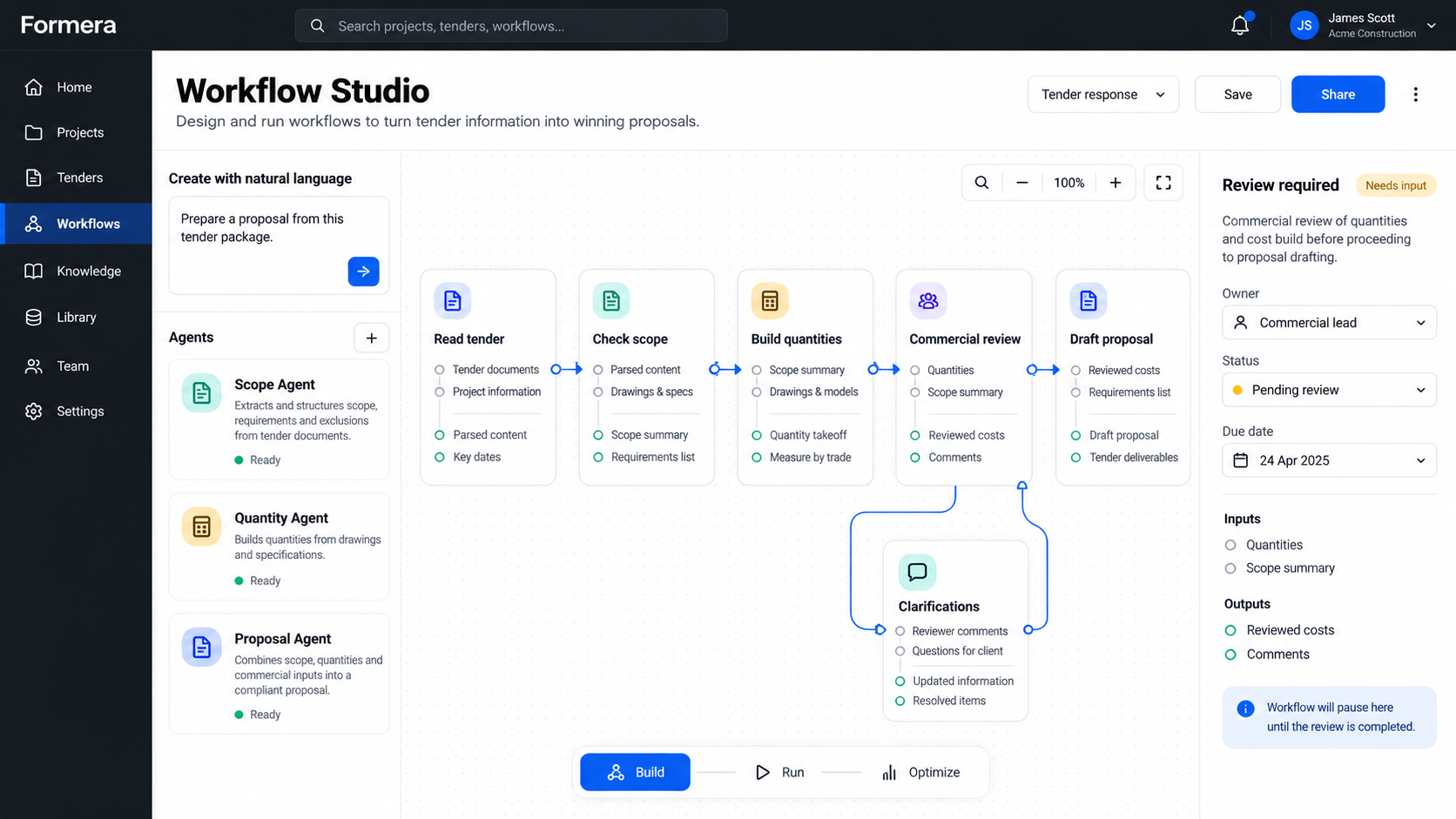
Bid & commercial
Tender & Scope
Turn tender packages into a clear bid decision. Extract requirements, surface scope gaps and prepare the questions your team needs to resolve.

Formera brings specialist AI agents, project data and your team into one connected workflow. We build and deploy the system around how your construction business works.
Move from scattered documents to a coordinated workflow. Specialist agents prepare the work, your team reviews the findings, and approved outputs return to the tools you use.
A practical cycle, shaped around construction teams and the decisions that move a project forward.
Define the repeated task, the project data it needs and the people accountable for the result.
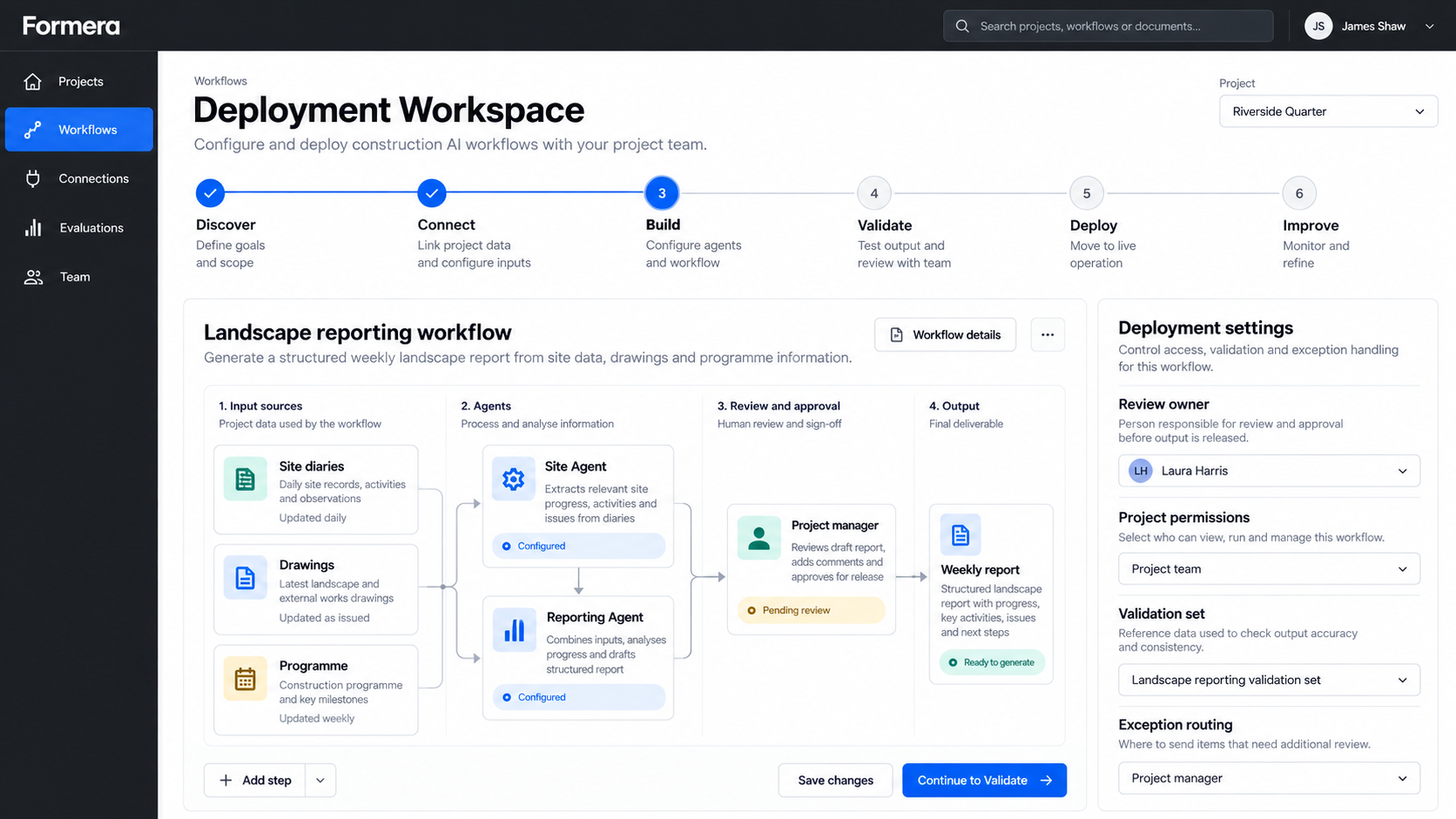
See the relationship between your sites, assets, utilities and ground information. Formera connects project maps and spatial layers so your team can compare locations, coordinate interfaces and understand constraints before the next decision.
Discuss this workflow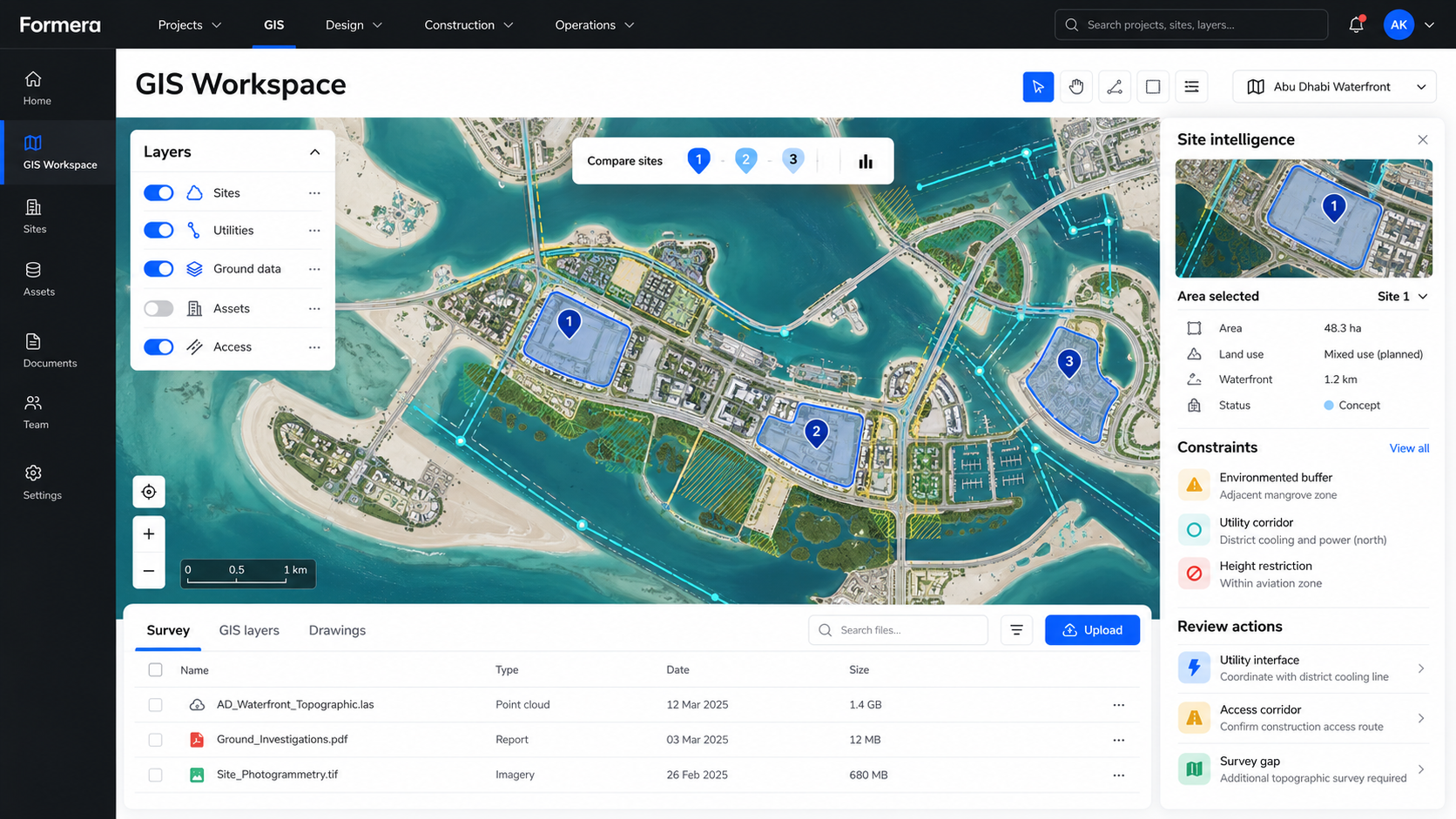
Bring model and asset context alongside drawings, inspections and maintenance history. Coordinate issues across design, construction and operations without replacing your existing authoring or checking tools.
Discuss this workflow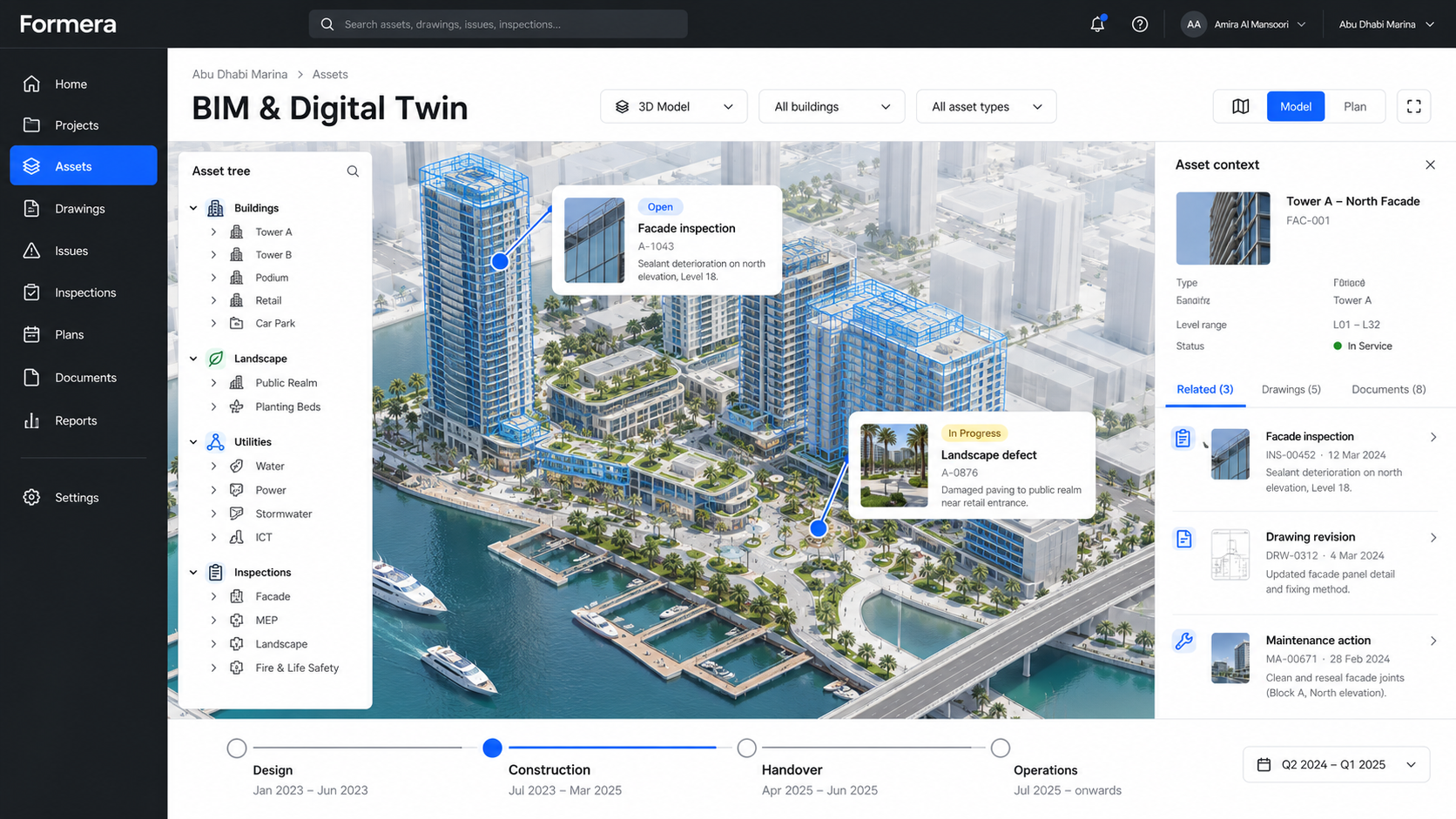
Connect programme dependencies and lookaheads with reporting, change orders, claims, contracts and procurement. Prepare quantities and commercial findings for the people responsible for validating them.
Discuss this workflow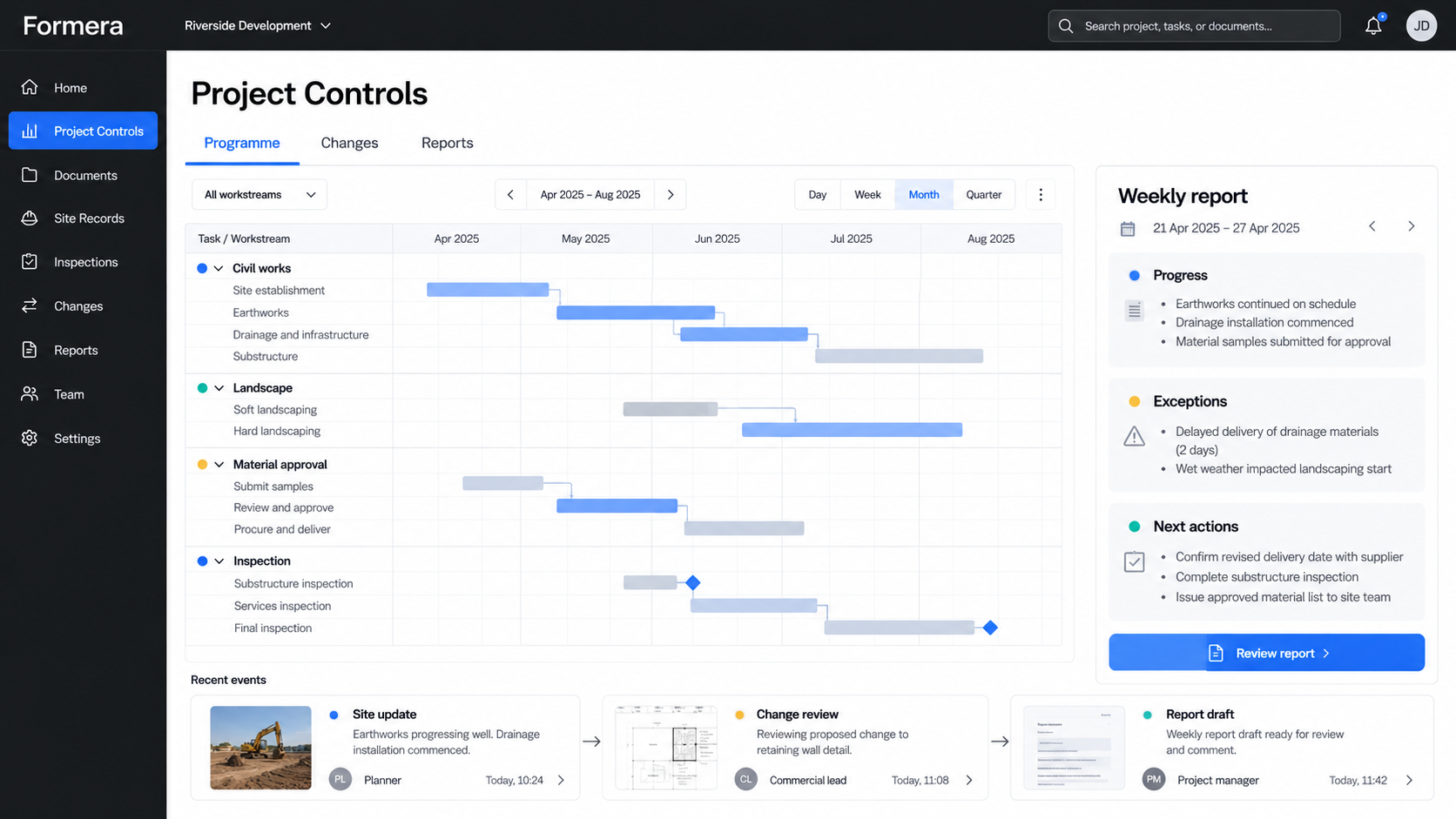
Explore nineteen configurable workflows. Inputs, actions and outputs are scoped and validated with your team during deployment.
Turn tender packages into a clear bid decision. Extract requirements, surface scope gaps and prepare the questions your team needs to resolve.
Prepare proposal drafts from an approved scope and your team’s knowledge. Keep assumptions, exclusions and commitments visible before issue.
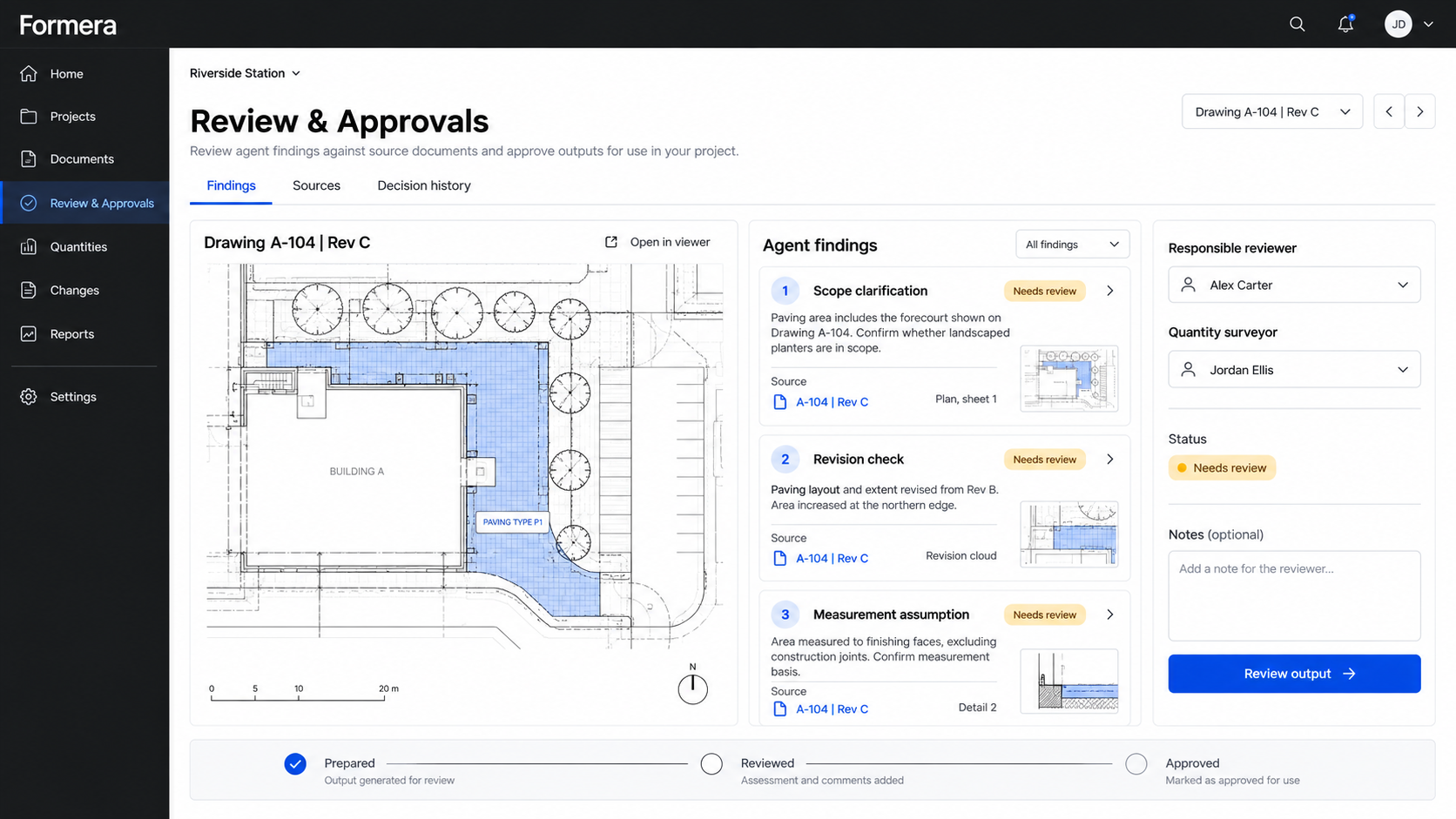
Help quantity surveyors check measurable scope and material requirements, with drawing references and explicit measurement assumptions.
Make project obligations, notice dates and responsible owners easier to track. Link every finding to the relevant contract text.
Bring the event, evidence and potential impact into one reviewable pack. Prepare draft notices and change-order documentation for the commercial team.
Connect progress and dependencies to the next practical action. Prepare lookaheads and scenario options for planner validation.
Build clearer daily, weekly and executive report drafts from approved project data. Surface exceptions and actions with named owners.
Turn inspections, diaries, photographs and RFIs into structured issues and reviewable next actions.
Help teams identify the right document and revision, prepare metadata and route information through controlled review.
Convert scanned reports, logs and tables into structured project data, while retaining the evidence behind each field.
Connect model issues to drawings, specifications and scope. Prepare a traceable issue register for the design team.
Bring asset models, location and inspection history together so teams can understand condition and plan the next intervention.
Keep procedures, audit evidence and corrective actions connected to the people responsible for them.
Compare supplier quotations against agreed scope and delivery needs. Surface gaps before orders are committed.
Structure ground information and highlight investigation gaps with source references for specialist review.
Give teams a clearer answer from approved project data, with the source, revision and permissions visible.
Connect GIS layers, surveys, drawings and location-based project information into a coordinated spatial workspace.
Compare sites against defined project criteria and highlight location constraints before further design or investigation.
Connect assets, inspections, maintenance records and utility networks by location.
Quantity workflows require surveyor validation and confirmed drawing calibration. BIM complements existing authoring and checking tools. Claims and contract findings require commercial/legal review. Programmes, CDEs and ERP remain your systems of record.
Our engineers work alongside your project, commercial and operations teams. Together, we define the workflow, connect permitted data, configure specialist agents and validate outputs with the people who know the work. Ownership stays clear as the system is deployed and improved.
Agree the customer problem, baseline and responsible owners.
Map approved documents, permissions and existing systems.
Configure specialist agents, tools and handoffs.
Test against reviewed examples and define exception handling.
Establish approvals, training and accountable operation.
Review exceptions, feedback and measurable workflow outcomes.
Connections to Microsoft 365, SharePoint, Teams, Excel, Word, CDEs, Primavera, ERP/CRM and BIM tools are scoped and tested during deployment.
Keep source and revision traceability visible. Define permissions and responsible reviewers for each deployment, evaluate outputs with experts and route exceptions before work is issued.
It coordinates a specific project workflow across evidence, specialist agents and accountable review, with outputs shaped for the team’s work.
Yes. The deployment is scoped around your working systems and data. Connections and delivery requirements are agreed and validated before use.
Choose one repeated, high-friction workflow with clear inputs, reviewers and an outcome you can measure.
Named members of your team review technical, commercial and other consequential outputs before they are issued or acted on.
No. Each deployment is configured around your project scope, evidence, rules and approval responsibilities.
Tell us where your team loses time.
We will help define a practical starting point.